Wednesday, 19 November 2014

Ancient Books

Ancient Roman Books

In antiquity, the standard form of books was taken from Pharaonic Egypt, scrolls usually made of papyrus and rarely of parchment. In ancient Rome, these book scrolls were widespread with Greek and Latin texts starting in the 3rd / 2nd century BC. The oldest Greek literature is likely that of Homer from 700 BC. It was not preserved as contemporary scrolls. Still, it can be assumed that the use of scrolls in Greece goes back to archaic times. In Greece, pictorial representations of scrolls exist from the 5th century BC.
But the oldest original findings of Greek papyrus scrolls come from Egypt. They date back to the 4th century BC. At that time, the great philosophical schools of Athens already owned book collections. The founding of libraries in several capital cities of Hellenic kingdoms, for example in Alexandria or Pergamon, helped the ancient book production gain momentum. There is evidence that books were copied in the library of Alexandria and also for these other libraries. The philologists therefore must have had their own book production, or at least one linked to the library.

Ancient Roman Scribes

The scribes in ancient Rome were paid according to the number of written lines. In a Diocletian
price edict (306 AD), three pay levels are listed. In the margin of the text, the lines were counted (stichometry). Since the price for private copies was calculated the same way, copies with stichometric numbers did not necessarily have to come from a bookseller. However, one sample from a bookseller might be a papyrus at the University of Milan, which contains the name Sosos in Greek script at the end of a commentary on Ilias. The papyrus, found in Egypt, could be from the Roman publishing house of the brothers Sosius. The epistles of Horace (65 – 8 BC) were also published by the brothers Sosius.

Changes in Ancient Books

The ancient papyrus scroll remained the predominant form for books until the 2nd century AD. In addition, since the 6th century BC there were early forms of the so-called codex in Greece. The ancient codex (plural codices) originally denoted a stack of wood or wax tablets with writing or that were intended for writing. Later these were also folded or bound papyrus or parchment “stacks” enclosed with two wooden blocks. In Latin, by the way, codex (originally caudex) means “trunk of a tree” or “block of wood”, and later the word meant “book” or “booklet.” In the Roman imperial period, both the Codex as well as the older book form, the scroll, were in use.
In the 4th century AD, the codex became the predominant form of book in late antiquity. Up to modern times, the book form changed very little. With the replacement of scrolls with the codex, however, papyrus was also increasingly replaced by the more precious and expensive parchment, which was also, however, dependent on imports.

Ancient Wooden Tablet Codices as the Predecessor of the Modern Book

The ancient wooden tablet codices remained in use for various purposes in the form of so-called diptych (also triptych or polyptych depending on the number of “pages”) throughout the entire ancient Roman period. This developed in the form of the codex made of parchment papers (rarely from papyrus) bound between two covers. The ancient codex was first in use at the same time as the book scrolls, but by late antiquity (4th/5th century AD) had replaced these as the standard form of ancient books. The oldest papyrus scrolls were even systematically copied to parchment codices. The reason: it was more convenient to use the codices and they were preferred by Christians. The late antique codex in this form is the predecessor of the Middle Age and modern book. 

Monday, 17 November 2014

Roman Baths and Thermae

Roman Baths

The Romans were famous for their baths and thermae. The ancient baths were set up along a central axis. In the thermae, there was a smaller space for the tepidarium, which was a warm bath. The frigidarium, a cold bath, was located in the basilica. In addition, there was the caldarium, a hot bath, and the natation, an open-air bathing pond. Symmetrically on both sides of the thermae were the changing rooms and rooms for massages, hair removal, or medical treatments. From the changing rooms (apodyteria), the people went to the sports areas (palaestra), and from there to a sauna (laconica) in order to sweat some more. After bathing in the caldarium, the skin was cleaned with a strigil. Then they went to the cooler tepidarium and, finally, to the frigidarium, with a leap into the cold water!
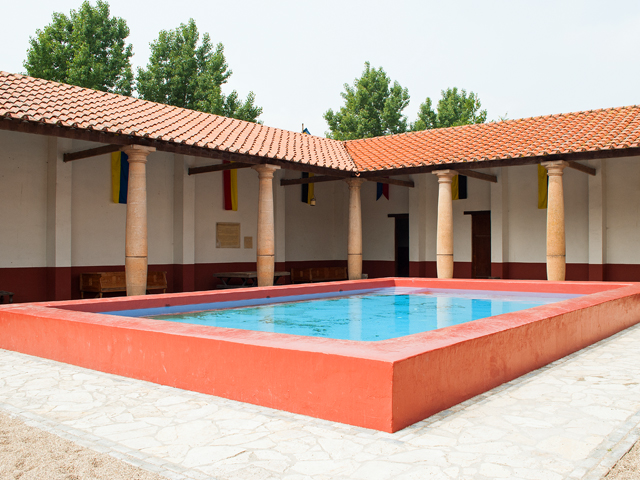
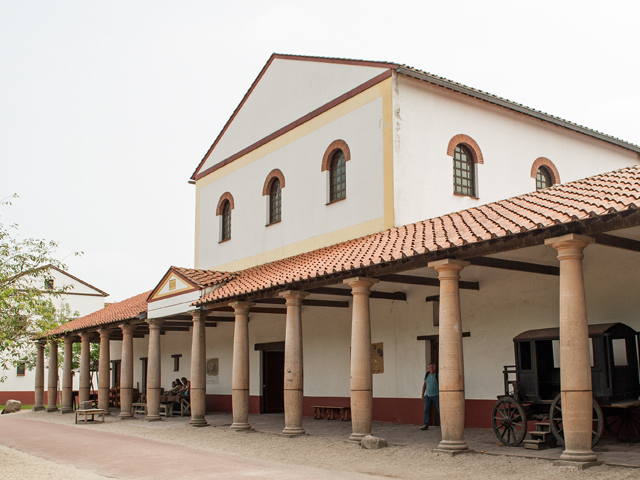
Roman Bath Thermae Archeon

Daily baths

For the Romans, bathing meant health and propriety. The Romans washed their arms and legs daily, as their everyday clothing left these parts of their body uncovered. The Romans washed their bodies once a week. At home, they washed in a primitive kind of washroom that was close to the kitchen so that the water could be heated on the stove and brought to the washroom without too much effort.

Public baths

But of course it was the Roman public baths and thermae that were so famous. During the last century of the Republic, the bathing habits of the Romans changed. Bathing in the public thermae became a part of the Romans’ daily life. They enjoyed visiting the public baths, which were soon opened in all areas of Rome. Even in smaller Italian cities and the provinces, public baths were operated. Often they were built where hot or mineral springs were found. These public institutions offered the Romans all kinds of baths, diving pools, showers, and (Turkish) massages. In many Roman baths, recreational activities were offered after the Greek model. There were gymnastic exercises, courts for various games, areas for reading and conversation, libraries and gymnastic equipment – everything that a sports club or modern gym and cultural clubs offer their members today. Soon, the bath’s amenities were more important than bathing itself. And the thermae became places of relaxation and pleasure. In places where there were no public baths or where they were too far away, well-to-do Romans had baths installed in their houses. Regardless of how expensive and luxurious these private baths were, they were only ever a second-best option to the public baths, where social concerns also had a high priority. Many Roman business was conducted in the thermae.
The ruins of numerous public and private baths could be found throughout the Roman world, so that today we can have a good idea of what the Roman public baths. Several elements were standard for the luxurious baths of antiquity.
There was always a warm anteroom and a hot as well as a cold bath. In addition, there was a place for oil rubs. There was an exercise room (palaestra) with a pool on one side (piscina) for a cool diving pool. There was also a side room (destrictarium) where sweat and dirt was scraped off with a strigil before and after bathing.

Baths, wine, and love!

The more simple bathing houses in earlier times as well as the bath itself was called balneum (balineum). As the public Roman baths became more complex, they were called balneae, and as they added Greek elements of recreation including an exercise room, they were finally called thermae. The basic equipment of a bath included a changing room and all kinds of baths: cold (frigidarium), warm (tepidarium), and hot (caldarium) baths, and steam or sweat baths (laconicum) similar to today’s saunas. The Roman baths were a center for leisure activities and communication. Around the water basin there were training, game, gymnastics, and massage areas. Especially the ball games was taken from the Greeks and very popular with the Roman bath guests. Around the large bathing houses there were expansive gardens and parks. The bath guests could go for a stroll there or take a sunbath on the terraces. If they were hungry or thirsty, the Romans went to one of many restaurants and taverns where merchants and cooks openly hawked their wares. For intellectual needs, museums and libraries were available. And there were even prostitutes for the Roman men’s leisure time in the thermae! In the Roman baths, the three most important things in life were combined: baths, wine, and love!

Artistic baths

The thermae were usually ostentatiously decorated. Floors and walls were often covered with colorful, picturesque mosaics. Ceilings were decorated with gold. In addition to artfully designed pillars made of granite and bathtubs of basalt and porphyry, famous artwork was discovered in the thermae: For example the Laocoon Group in the famous Baths of Trajan.

Personal hygiene and other well-being

The public baths were heated with charcoal. An oven ensured comfortable temperatures, and the warm air was even pressed into the hollow spaces of the floors with a large tube. The bath houses served on the one hand for maintaining good health, but they were also a place of leisure and pleasure. Personal hygiene included utensils like oil, cleaning supplies, or hair tonics. The Roman bath guests brought these materials and towels with them as well as their own servant if they could afford one. The servants guarded the cloakroom, massaged their masters, and helped them with personal hygiene and hair removal. Extensive salves, hairdressing, and make-up after bathing were also a part of the Roman bathing ritual. Those who didn’t have their own servants could rent a bather or a masseur.

Times for bathing

The opening hours of the Roman thermae were the same everywhere. The thermae were usually only open in the afternoons. They were sometimes also opened in the night or in the morning. At the beginning, they opened the doors to the baths around midday. But after Hadrian’s reign, they only opened in the early afternoon at the eighth hour. The baths were closed at sundown. The typical bathing time for the Romans was between the midday break and the main meal.
Men and women bathed separately. Often the baths were in the same building complex but with different entrances for men and women. Sometimes different bathing hours were also set if the complex was not big enough to separate men and women. Then there was the option of simply having one bathing day for women and one for men. In addition, in Rome smaller bathing houses (balnae) were reserved for women. At the time of the emperor Trajan, the women were probably allowed to go to the larger thermae as well, but bathing together with men was viewed as improper. Especially because it was not usual for clothes to be worn while bathing – the Romans had nothing like swim trunks or bikinis -, bathing together would have led to a scandal. During Hadrian’s time, a prohibition against bathing together was made. This also resulted in different bathing times. Both sexes could be present at the same time outside of the baths, however, in the other rooms and areas of the baths like the sports areas, the parks, museums, etc.
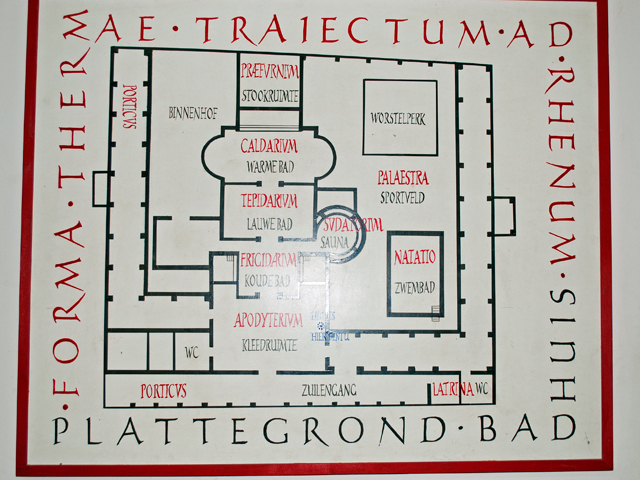
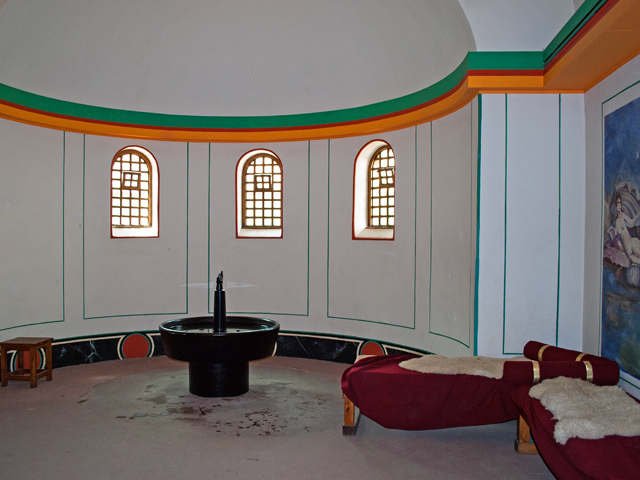
Bath plan Roman thermae

Sponsors for the baths

The price of admission into the Roman baths was not the same everywhere, but it was usually affordable. Children could often enter for free, but women often had to pay more than men. The lower prices also made it possible for people from lower classes to visit the baths. Their popularity therefore steadily increased. Soon bathing was no longer considered a leisurely pastime but was a daily activity. This led to greater demand but, at the same time, to ever greater competitive pressure. The architecture and amenities of the baths became more elaborate, and the decorations in the public baths became more expensive. Well-to-do citizens or politicians therefore endowed the baths or paid the admission fees for one year. Of course, that not only increased the popularity of bathing but also the reputation of the sponsors!

Donors to the baths

One example of an extremely generous bath sponsor was Agrippa, who paid the admission fees to all 170 bath houses in Rome in 33 BC and charged no admission fees in the bath house he later built himself. He was thus very popular with the people. Even emperors such as Nero, Titus, Trajan, or Caracalla had baths built. Of course each wanted to outdo his predecessor in terms of the size, beauty, and costliness of his baths. The emperors Titus and Hadrian even enjoyed bathing together with the people in order to gain popularity. Because baths were open to everyone, wealthy citizens often also had their own pools. The wealthier a person was, the bigger their pool! Some were even as large as the public baths. And the design and decoration of the private Roman baths of the wealthy was usually more expensive and artistically valuable than the already very ornately decorated public Roman bath houses.

Expansion of public Roman baths

Public Roman baths only became known after the Second Punic War. The number of Roman baths quickly increased, however. At least 170 baths were operated in Rome in 33 BC, and later there were more than eight hundred bath houses for Roman citizens. Baths spread just as quickly throughout all of Italy and in the Roman provinces. All Roman cities and even many villages had at least one public bath. The baths were only public in the sense that they were accessible for all citizens. Admission fees were usually modest for using the baths. There were no free baths. However, generous and wealthy citizens or candidates for a Roman political office would make it possible for people to visit the bath for free by paying the fees and operational costs of the bath themselves for a period of time. For example, in 33 BC, Agrippa opened all 170 bath houses in Rome for free for the citizens of the city. He was greatly respected and enjoyed a great deal of prestige among the citizens for this. Some rich citizens also put in their testament that the baths should be opened to all citizens for free for a certain period of time.

Roman baths as businesses

The first public Roman baths were opened by individuals for speculative purposes. They wanted to earn money. Others were built by wealthy men as a gift to their city or their place of birth. The city was responsible for managing the public baths, and the agencies maintained the buildings in which there were public baths. The operation of public baths was paid by the admission fees, however. There were also public baths which were built with city funds. These were later attributed to the emperors. Most Roman baths were leased to an owner and an operator. They paid a set amount for a certain period of time to a manager who covered his costs with the admission fees and made a profit from the other charges.

Around the Roman bath

The admission fee (balneaticum) for visiting the public Roman baths was little more than nominal. The person brought his own towel, creams, and oils. Women often paid more than men, sometimes twice as much, while children up to a certain age were allowed to use the public baths for free. The price varied depending on the place, size of the bath, and the amount of luxury offered. Higher prices were probably set in the baths that were more luxurious and therefore were considered more exclusive and fashionable.
Women went to public bath houses just like today except that they were only amongst other women. They enjoyed the opportunity to meet with their friends to talk just as the men did. In big cities, there were separate public baths only for women or only for men. However, within the same bath house there was also the possibility to separate the sexes. The rooms for men were usually larger than those for women. Maybe that means more men visited the public Roman baths. In smaller cities which only had small bath houses and couldn’t have separate bathing activities, the public bath was open at different times for men and women. Later in the Roman Empire there were supposedly bathing houses that men and women used together. However, these were mostly women without a respectable status.
Baths were regularly taken between the meridiatio and cena. The hour varied in the different seasons, however, and for different classes. In general it is said that the bath was taken at the eighth hour, and at this time all bath operators were contractually obligated to open the bath house and have everything ready. Many Romans preferred to bath at prandium – about the time of second breakfast around midday – and at least in larger cities the public baths needed to be open then for guests. But actually, all public baths were regularly operated until sundown. In smaller cities were there were not many public baths, it is even probable that the baths were kept open after sundown. Many lanterns were found in the Roman bath houses in Pompeii, anyway, which indicate bathing was done in the evening hours. In general, the operators kept the doors to their bath houses open as long as it was profitable for them!

If you like this, and look for a growing dictionary of Roman realia, click here

Friday, 14 November 2014

Roman Architecture

Roman Architecture

The word architecture refers to the art and science of conceptualizing and erecting buildings. The ancient Romans were masters of architecture, design, and erecting buildings. The skill of the Romans in erecting and constructing buildings, including the invention of concrete, led to the creation of different types and styles of Roman architecture in building fortresses, villas, temples, even entire city quarters, baths, large walls, and roads. Roman construction and architecture permanently changed the face of Europe.

Architecture of the Romans

An overview of Roman architecture, and of the construction, planning, and building of Roman architecture in antiquity had clear characteristics. These are reflected even today in the basilica, in baths, amphitheaters like the Coliseum, the Arc de Triomphe, old villas, temples, streets, forts and palisades, cities, and aqueducts. The fact that the Romans discovered concrete is a true journey of discovery that leads one through the Roman world of the famous pillars and arches.

A Colossus of Roman Architecture

The symbol of the power and wealth of the Roman Empire was the Coliseum, built in the center of Rome. In less than 10 years, the Romans erected this ancient construction that demonstrated the perfection of Roman architectural expertise. It was conceptualized and built by outstanding and famous engineers. The remarkable accomplishment of Roman architecture is a monument for one of the most famous Roman inventions: concrete. The Roman arches stand prominently around the building, and the pillars demonstrate the various styles of architecture: Tuscan pillars on the underside of the Colosseum, Ionic, and, finally, on the third level, Corinthian pillars.

Historical Information on Roman Architecture

The Roman time marked the shift of the Western world from a region populated by barbaric clans to the civilization of the global conqueror: the Roman Empire. The time of Roman architecture starts with the founding of the Republic in 509 BC. It stretches to the transfer of the capital of the empire from Rome to the Eastern Empire in Constantinople in 330 A.D. The history of Roman architecture is separated into two periods. During the first period, the period of the Republic, the origins of Roman architecture can be traced back to the Etruscans who carried on the Greek and Phoenician traditions. An example of this is the erection of large temples to honor their gods.
The second period of architecture began in 27 BC and is considered the period of the Roman Empire. The Roman Empire stretched over thousands of miles from Europe to North Africa and the Middle East. The large number of countries conquered by the Romans in the course of time brought with them a rich cultural diversity that was reflected in Roman architecture. The result was an eclectic architectural style, a Roman architecture, that melted together numerous elements from the diverse regional styles and architectural traditions and made something new.

Ancient Roman Architecture - Instructions from the Roman Era

The era of Roman architecture in the shift from the Republic to the imperial period was a time of development in Roman architecture and creation of completely new constructions. For example, the old Romans are responsible for the so-called forums. These were squares framed by temples, stores, and basilica. Basilica were also first created during this time. Baths were a special challenge of typical Roman architecture. Markets such as the Trajan Market in Rome were created. This is a five-story building complex with stores, bars, and restaurants.
The architects in Rome became famous for the amphitheaters like the famous Coliseum and the Circus Maximus as well as for theaters. Triumphal arches celebrated the Roman victories. Villas, temples, streets, forts and palisades, cities, and aqueducts are evidence of Roman architecture.

All Roads Lead to Rome – Social and Cultural Change in Roman Architecture

The Roman Empire was expanding and Roman architecture increasingly changed. The splendor of Roman architecture reflected the social changes of people in Rome. After all, the Romans were the conquerors of half of the civilized world. The great stone and marble constructions of the Romans presented their civilization and their wealth, their dominance and power to all who lived in slavery. In order to rule the Roman Empire and show its power, it was necessary to be able to quickly access all regions and provinces. Roads were needed to be able to more quickly travel from one Roman region to the next. Over 82,000 km of roads were built in a star form around the capital to all provinces and regions. It is therefore no wonder that even today people say: “All roads lead to Rome.”

Theater for the People

The massive antique amphitheaters were built for the people. The old Roman games were a form of entertainment while they also displayed power and dominance. Men’s brutal blood sacrifices, for example when fighting against exotic creatures like crocodiles, leopards, elephants, lions, and tigers, were designed to show the Roman Empire’s prominent position of power. However, the changing needs of the people also demanded innovations in ancient Roman architecture. The Roman emperors needed the support of the people to stay in power, and this meant that large public construction projects were taken on. Games were held in the massive amphitheaters like the Coliseum and the Circus Maximus. Spectacular triumphal parades through the broad Roman streets and through the triumphal arches of the forums were a way for the regents to enthuse the people.
These usually culminated in worship of the gods in the splendorous temples. Public baths became popular in ancient Rome, not only for the rich, but for all people - of course with differences in terms of Roman architecture. Well-to-do Roman patricians wanted to demonstrate their wealth and had magnificent villas built. Here there was a true competition and innovation in Roman architecture. Cities were built in this time, or conceptualized and constructed, and for everyone there was a public bath – the focal point of Roman society and social life.

Construction Materials and Work in Roman Architecture

Which materials were easy for the Roman architects to access? At first, many buildings created by Roman architects were made of wood. Stone and marble were often too expensive. Many skills had to be acquired through the course of time in order to achieve the high standards of ancient Roman architecture. In order to be able to build large structures and cities, thousands of workers were needed. For the Romans that was no problem! After all, they had millions of slaves from the conquered areas. They took the best ideas and concepts from the buildings in these regions as models and also had the Roman army, which was responsible for building the giant network of old Roman roads. The wonderful and exemplary buildings of ancient Roman architecture were only made possible when the Romans invented concrete. Without this, buildings like the Pantheon or the arches and the Coliseum wouldn’t have been architecturally possible.

A growing dictionary of Roman realia you will find here

Friday, 19 September 2014

The Roman goddesses and gods - an introduction


The Pantheon of Roman gods and the Greek gods with their description


Roman Name of the Roman goddesses and gods
Roman Name of the Greek goddesses and gods
Description
Apollo
Apollo
god of the Sun, poetry, music, Oracle
Bacchus
Dyonisos
god of wine
Ceres
Demeter
goddess of agriculture
Cupid
Eros
god of love
Artemis
Diana
goddess of the hunt
Fauna
Maia
goddess of animals
Flora
Chloris
goddess of flowers and spring
Fortuna
Tyche
goddess of happiness
Janus
 
god of the beginning and the end
Juno
Hera
the goddess of marriage
Jupiter
Zeus
god of heaven and king of the gods
Mars
Ares
god of war
Mercury
Hermes
Messenger of the gods and God of finances, poets and writers
Minerva
Pallas Athena
goddess of wisdom
Neptune
Poseidon
god of sea
Pluto
Hades
god of the underworld and death
Saturn
Kronos
god of time, harvest and agriculture
Venus
Aphrodite
goddess of love and beauty
Vesta
Hestia
goddess of the heart, the home and the Roman State
Vulcanus
Hephaestus
god of fire and the forge

 
Ever more new-Roman deities

The Roman goddess Vesta was borrowed from the Greek, and corresponded to Hestia, the goddess of the hearth fire. She was worshipped in the Temple of Vesta in the Forum. Their circular Temple corresponded to the ancient italic round hut. The eternal flame, which was guarded by six vestal virgins, burned in the temple with 20 columns. She lived in a neighboring House and their "service" took 30 years. The Roman virgins to guard the Temple had to live as virgins. If one of them fell, she was walled up alive. And if one did not pay attention and let the external fire extinguish, she was scourged to death by the Pontiff Maximus. However, when a criminal who had been sentenced to death, on his way to the execution met a vestal virgin, he was pardoned. Vestal virgins were so highly regarded that even Senators made place for them when they met in the street. The Roman rulers deposited their testaments in the Temple of Vesta.

Examples of how Romans paid homage to their gods

Ceres, the goddess of agriculture, was worshipped when a famine in Rome broke out in the year 496 BC. To her together with Liber (gr. Dionysos) and Libera (gr. Persephone) a temple was donated. Mars was the God of war and thus the God of the soldiers and the military. The month of March was dedicated to him, because he was originally the old Latin god of agriculture and of spring. On March 1, the Roman Mars priests who came from twelve noble families, held their celebrations in honor of Mars. The farmers went with a bull, a pig and a sheep goat across the fields and sacrificed the animals to the deity of Mars. Mercury was the God of traders, poets and writers. At the Circus Maximus, who was at the same time also the Corn Exchange of Rome, he had his temple. Here was also the seat of the panel of the Roman merchants (mercuriales).

Venus is the goddess of love and beauty. She is the mother of Aeneas and thus the ancestress of the family of the Iulier which they worshipped as Generix. She was also the Roman goddess of the garden for the farmers. Neptune as God of the water was the Greek Poseidon in the Roman pantheon. Apollo, initially considered as a healing god, later became the god of arts, divination, the exiles and the displaced persons. In the Roman Empire, he was also Sol, the Sun God of the Romans. His sister was Diane, who was the Greek god artemis, a goddess of the hunt.

Roman gods

In addition to the old and new gods, Romans worshipped further divine beings, the Lares, Penates and Manes. The Lares were the gods of the house and the spirits of the deceased who looked after the house. They even remained when a Roman family left their house. The Penates were the gods of the inhabitants of the houses. You were dependent on their health and prosperity. Her name is derived from the Latin word penus meaning supplies. The Penates accompanied the families, but alsoe the State had his Penates. The Manes were the souls of the dead, which were worshipped by the Romans. They were not only worshipped, even a Festival was celebrated to their honour on 21 February (feralia). Marriage was forbidden on that day, the temples were closed and Roman officials were not allowed to wear official clothing. The Manes are often mentioned under the symbol DM - dis manibus - on Roman gravestones manibus.

Roman ink and paint - was it a dangerous to health?


Ancient ink was often carbon-based, but was also made with metals like copper, which, sometimes, was concocted with little or no sulfur. During the Roman Empire and towards the medieval times, we notice a move towards the famous iron gall inks (made with iron sulfate) which became popular and remained so until modern times. A good example for the transition can be seen in the Coptic fragments of the famous, only recently re-discovered Gospel of Judas which links the ancient world to the modern, as the scribe used iron gall ink that also included black carbon soot bound with a gum binder.
This move is interesting also from a health perspective. Although iron sulfate in larger quantities are dangerous for the human body, smaller quantities are even used as general iron supplement in humans without any reports of adverse long term health effects. The added Oak gall apples' fluid (produced from cooking Oak gall apples for half an hour) were also a natural product. Oak gall apples grow on Oak trees, induced by wasps and their eggs.
For a long time, people have seen the beneficial benefits for women’s health and general health as well from Oak extracts. These have natural antiseptic properties that are effective in eliminating bacteria, yeast and fungal infection, the main cause of itching and unpleasant odor in the intimate area. Hence the gall apples did not only physically protect the wasp's egg, it did so also biologically.

As binding material, the Romans used Gum arabic, a natural gum made of hardened sap that is taken from two species of the acacia tree and links the Roman economy to central Africa and the Senegal or Somalia, although the species have also been historically cultivated in Arabia.
Now, Gum arabic is famous still today as source of the sugars arabinose and ribose and better known
in the food industry as an edible stabilizer (E number E414). As in antiquity, where it was (and in some countries still is) used to make a chilled, sweetened, and flavored gelato-like dessert. It is the basis for many soft drink syrups, "hard" gummy candies such as gumdrops, marshmallows, chocolate candies, and edible glitter, or for popular modern cake-decorating staple.


Wednesday, 17 September 2014

Parchment - writing an animal skins?


In the Roman times parchment was a common writing material, although quite expensive, as it was made of animal skin, also known as “membrana”. The actual name “parchment” was found later in late antique times in sources by Edict of Diocletian (VII38).

Parchment started competing with Papyrus from around 400 A.D. and eventually took over papyrus.
This happened especially because parchment was easier to produce since it was available nearly everywhere due to the simple raw materials needed. Papyrus was a lot more difficult to produce and production availability was limited to plants that only grew in a few regions such as North Africa and Syria.

This was the beginning of the use of parchment in the literary world also because writing errors can easily be erased and fixed in parchment, unlike with papyrus which was harder to fix.

The production of parchment happens in several steps. The animal skin is put in lime lye where the hair detaches. Adjacent is the skin stretched into a wooden frame and still in wet condition scraped with a knife.
When all hair residues are removed, the surface can be smoothened to become a writable surface. This costly process hasn’t changed for thousands of years and is still today traditionally exercised.

Writing on goat or sheep skin is not only a special writing experience, but one can produce something that is durable and eccentric – decorative, rustic and impressionable – but also suitable for the day to day use like to protect books. Hence, it is not only something that was used by Romans, but still very common for important documents in the Middle Ages, but also in modern times.

Wednesday, 15 January 2014

No more replica coins on ebay - where to go now?


As ebayers may have noticed, all (or almost all) replica coins (Greek, Roman, Medieval, Viking, Tudor ...) have gone. Only because some fraudulent ebay sellers have offered replica coins as originals (at a ridiculous price) or have offered cheap import products without clear markings of the products being replica, ebay claims that the Bank of England has urged its site to stop selling replica coins at all.
The move was already indicated by the creation, a few months ago, of a special area of "novelties" within the coins section of ebay. Yet, this does seem to have done the job. Hence, the move to totally ban replica coins from ebay.

This is, of course, a big blow against those customers who have enjoyed a reliable service of those who offered clearly signed and marked replica coins. It is a special blow to the educational sector where pupils in primary and secondary schools, but also students in universities and those attending workshops in museums where introduced into understanding, handling and reading coins of the Greek, Roman or later periods. It is always a wonderful experience to let students not only see or here about coins, but also let them touch and explore what such physical material can tell us about the past. Of course, it is hardly possible to use original material, but ebay offered a fantastic platform where to purchase for relatively little money objects that one could use even in bigger sized classes.
So, where to go now? Fortunately, amazon still sells replica, and we hope that the Bank of England is not going to stop this platform as well. But then, there are also other platforms that specialize in replica from arts and antiquity. And hopefully, they carry on to providing the educational sector, museums and collectors with high quality products at replica prices.