Roman Baths
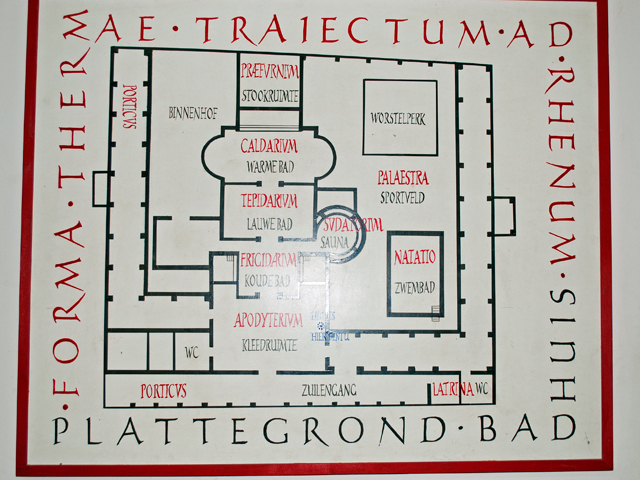
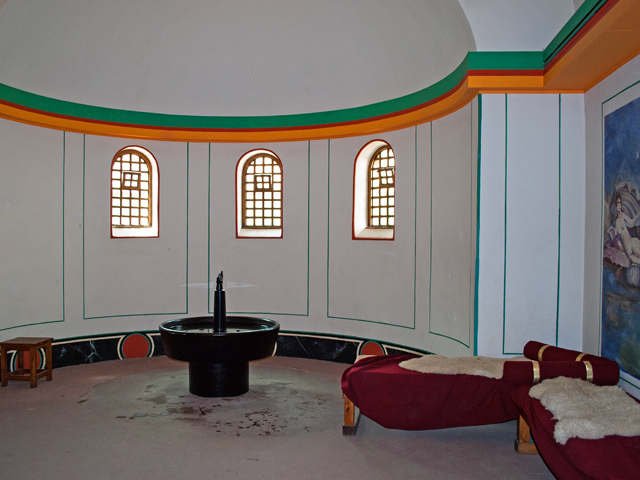
The Romans were famous for their baths and thermae. The ancient baths were set up along a central axis. In the thermae, there was a smaller space for the tepidarium, which was a warm bath. The frigidarium, a cold bath, was located in the basilica. In addition, there was the caldarium, a hot bath, and the natation, an open-air bathing pond. Symmetrically on both sides of the thermae were the changing rooms and rooms for massages, hair removal, or medical treatments. From the changing rooms (apodyteria), the people went to the sports areas (palaestra), and from there to a sauna (laconica) in order to sweat some more. After bathing in the caldarium, the skin was cleaned with a strigil. Then they went to the cooler tepidarium and, finally, to the frigidarium, with a leap into the cold water!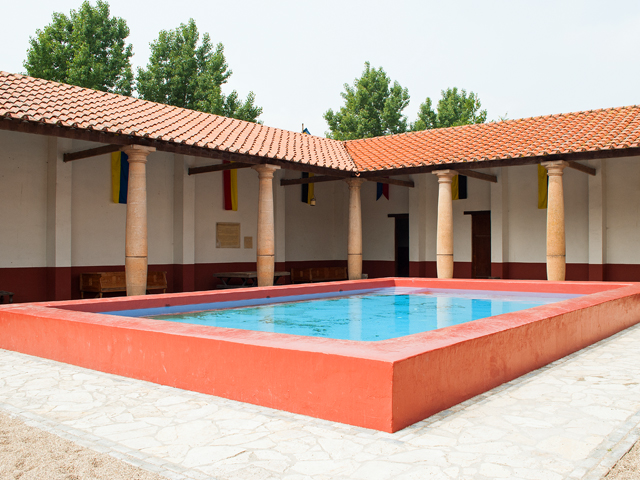
Daily baths
For the Romans, bathing meant health and propriety. The Romans washed their arms and legs daily, as their everyday clothing left these parts of their body uncovered. The Romans washed their bodies once a week. At home, they washed in a primitive kind of washroom that was close to the kitchen so that the water could be heated on the stove and brought to the washroom without too much effort.Public baths
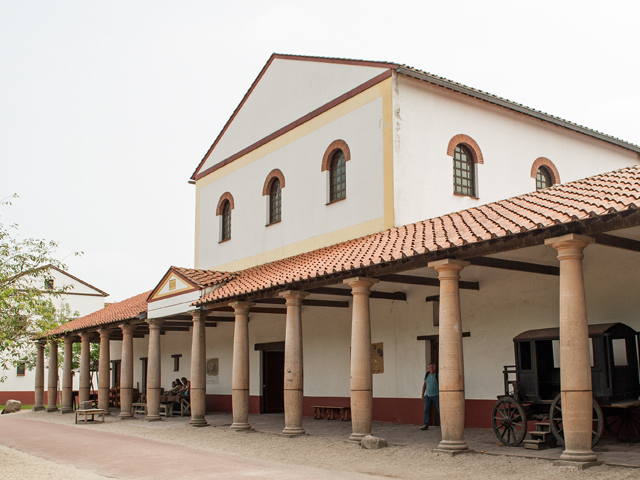
But of course it was the Roman public baths and thermae that were so famous. During the last century of the Republic, the bathing habits of the Romans changed. Bathing in the public thermae became a part of the Romans’ daily life. They enjoyed visiting the public baths, which were soon opened in all areas of Rome. Even in smaller Italian cities and the provinces, public baths were operated. Often they were built where hot or mineral springs were found. These public institutions offered the Romans all kinds of baths, diving pools, showers, and (Turkish) massages. In many Roman baths, recreational activities were offered after the Greek model. There were gymnastic exercises, courts for various games, areas for reading and conversation, libraries and gymnastic equipment – everything that a sports club or modern gym and cultural clubs offer their members today. Soon, the bath’s amenities were more important than bathing itself. And the thermae became places of relaxation and pleasure. In places where there were no public baths or where they were too far away, well-to-do Romans had baths installed in their houses. Regardless of how expensive and luxurious these private baths were, they were only ever a second-best option to the public baths, where social concerns also had a high priority. Many Roman business was conducted in the thermae.The ruins of numerous public and private baths could be found throughout the Roman world, so that today we can have a good idea of what the Roman public baths. Several elements were standard for the luxurious baths of antiquity.
There was always a warm anteroom and a hot as well as a cold bath. In addition, there was a place for oil rubs. There was an exercise room (palaestra) with a pool on one side (piscina) for a cool diving pool. There was also a side room (destrictarium) where sweat and dirt was scraped off with a strigil before and after bathing.
Baths, wine, and love!
The more simple bathing houses in earlier times as well as the bath itself was called balneum (balineum). As the public Roman baths became more complex, they were called balneae, and as they added Greek elements of recreation including an exercise room, they were finally called thermae. The basic equipment of a bath included a changing room and all kinds of baths: cold (frigidarium), warm (tepidarium), and hot (caldarium) baths, and steam or sweat baths (laconicum) similar to today’s saunas. The Roman baths were a center for leisure activities and communication. Around the water basin there were training, game, gymnastics, and massage areas. Especially the ball games was taken from the Greeks and very popular with the Roman bath guests. Around the large bathing houses there were expansive gardens and parks. The bath guests could go for a stroll there or take a sunbath on the terraces. If they were hungry or thirsty, the Romans went to one of many restaurants and taverns where merchants and cooks openly hawked their wares. For intellectual needs, museums and libraries were available. And there were even prostitutes for the Roman men’s leisure time in the thermae! In the Roman baths, the three most important things in life were combined: baths, wine, and love!Artistic baths
The thermae were usually ostentatiously decorated. Floors and walls were often covered with colorful, picturesque mosaics. Ceilings were decorated with gold. In addition to artfully designed pillars made of granite and bathtubs of basalt and porphyry, famous artwork was discovered in the thermae: For example the Laocoon Group in the famous Baths of Trajan.Personal hygiene and other well-being
The public baths were heated with charcoal. An oven ensured comfortable temperatures, and the warm air was even pressed into the hollow spaces of the floors with a large tube. The bath houses served on the one hand for maintaining good health, but they were also a place of leisure and pleasure. Personal hygiene included utensils like oil, cleaning supplies, or hair tonics. The Roman bath guests brought these materials and towels with them as well as their own servant if they could afford one. The servants guarded the cloakroom, massaged their masters, and helped them with personal hygiene and hair removal. Extensive salves, hairdressing, and make-up after bathing were also a part of the Roman bathing ritual. Those who didn’t have their own servants could rent a bather or a masseur.Times for bathing
The opening hours of the Roman thermae were the same everywhere. The thermae were usually only open in the afternoons. They were sometimes also opened in the night or in the morning. At the beginning, they opened the doors to the baths around midday. But after Hadrian’s reign, they only opened in the early afternoon at the eighth hour. The baths were closed at sundown. The typical bathing time for the Romans was between the midday break and the main meal.Men and women bathed separately. Often the baths were in the same building complex but with different entrances for men and women. Sometimes different bathing hours were also set if the complex was not big enough to separate men and women. Then there was the option of simply having one bathing day for women and one for men. In addition, in Rome smaller bathing houses (balnae) were reserved for women. At the time of the emperor Trajan, the women were probably allowed to go to the larger thermae as well, but bathing together with men was viewed as improper. Especially because it was not usual for clothes to be worn while bathing – the Romans had nothing like swim trunks or bikinis -, bathing together would have led to a scandal. During Hadrian’s time, a prohibition against bathing together was made. This also resulted in different bathing times. Both sexes could be present at the same time outside of the baths, however, in the other rooms and areas of the baths like the sports areas, the parks, museums, etc.
Sponsors for the baths
The price of admission into the Roman baths was not the same everywhere, but it was usually affordable. Children could often enter for free, but women often had to pay more than men. The lower prices also made it possible for people from lower classes to visit the baths. Their popularity therefore steadily increased. Soon bathing was no longer considered a leisurely pastime but was a daily activity. This led to greater demand but, at the same time, to ever greater competitive pressure. The architecture and amenities of the baths became more elaborate, and the decorations in the public baths became more expensive. Well-to-do citizens or politicians therefore endowed the baths or paid the admission fees for one year. Of course, that not only increased the popularity of bathing but also the reputation of the sponsors!Donors to the baths
One example of an extremely generous bath sponsor was Agrippa, who paid the admission fees to all 170 bath houses in Rome in 33 BC and charged no admission fees in the bath house he later built himself. He was thus very popular with the people. Even emperors such as Nero, Titus, Trajan, or Caracalla had baths built. Of course each wanted to outdo his predecessor in terms of the size, beauty, and costliness of his baths. The emperors Titus and Hadrian even enjoyed bathing together with the people in order to gain popularity. Because baths were open to everyone, wealthy citizens often also had their own pools. The wealthier a person was, the bigger their pool! Some were even as large as the public baths. And the design and decoration of the private Roman baths of the wealthy was usually more expensive and artistically valuable than the already very ornately decorated public Roman bath houses.Expansion of public Roman baths
Public Roman baths only became known after the Second Punic War. The number of Roman baths quickly increased, however. At least 170 baths were operated in Rome in 33 BC, and later there were more than eight hundred bath houses for Roman citizens. Baths spread just as quickly throughout all of Italy and in the Roman provinces. All Roman cities and even many villages had at least one public bath. The baths were only public in the sense that they were accessible for all citizens. Admission fees were usually modest for using the baths. There were no free baths. However, generous and wealthy citizens or candidates for a Roman political office would make it possible for people to visit the bath for free by paying the fees and operational costs of the bath themselves for a period of time. For example, in 33 BC, Agrippa opened all 170 bath houses in Rome for free for the citizens of the city. He was greatly respected and enjoyed a great deal of prestige among the citizens for this. Some rich citizens also put in their testament that the baths should be opened to all citizens for free for a certain period of time.Roman baths as businesses
The first public Roman baths were opened by individuals for speculative purposes. They wanted to earn money. Others were built by wealthy men as a gift to their city or their place of birth. The city was responsible for managing the public baths, and the agencies maintained the buildings in which there were public baths. The operation of public baths was paid by the admission fees, however. There were also public baths which were built with city funds. These were later attributed to the emperors. Most Roman baths were leased to an owner and an operator. They paid a set amount for a certain period of time to a manager who covered his costs with the admission fees and made a profit from the other charges.Around the Roman bath
The admission fee (balneaticum) for visiting the public Roman baths was little more than nominal. The person brought his own towel, creams, and oils. Women often paid more than men, sometimes twice as much, while children up to a certain age were allowed to use the public baths for free. The price varied depending on the place, size of the bath, and the amount of luxury offered. Higher prices were probably set in the baths that were more luxurious and therefore were considered more exclusive and fashionable.Women went to public bath houses just like today except that they were only amongst other women. They enjoyed the opportunity to meet with their friends to talk just as the men did. In big cities, there were separate public baths only for women or only for men. However, within the same bath house there was also the possibility to separate the sexes. The rooms for men were usually larger than those for women. Maybe that means more men visited the public Roman baths. In smaller cities which only had small bath houses and couldn’t have separate bathing activities, the public bath was open at different times for men and women. Later in the Roman Empire there were supposedly bathing houses that men and women used together. However, these were mostly women without a respectable status.
Baths were regularly taken between the meridiatio and cena. The hour varied in the different seasons, however, and for different classes. In general it is said that the bath was taken at the eighth hour, and at this time all bath operators were contractually obligated to open the bath house and have everything ready. Many Romans preferred to bath at prandium – about the time of second breakfast around midday – and at least in larger cities the public baths needed to be open then for guests. But actually, all public baths were regularly operated until sundown. In smaller cities were there were not many public baths, it is even probable that the baths were kept open after sundown. Many lanterns were found in the Roman bath houses in Pompeii, anyway, which indicate bathing was done in the evening hours. In general, the operators kept the doors to their bath houses open as long as it was profitable for them!
If you like this, and look for a growing dictionary of Roman realia, click here
